
Hantavirus: Transmission and Prevention of an Emerging Zoonosis
The hantavirus disease is a zoonosis transmitted mainly by rodents which may cause severe respiratory and renal complications in humans. Epidemiological surveillance and preventive measures are essential to reduce the risk of infection.

Aetiology
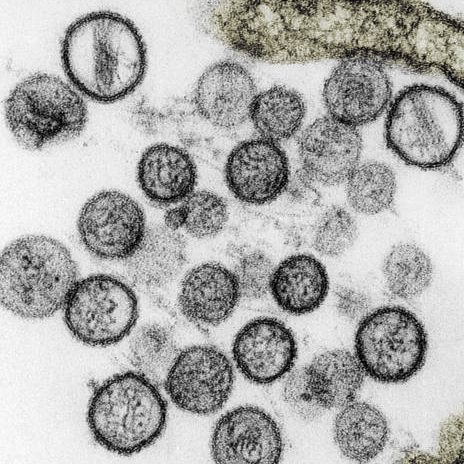
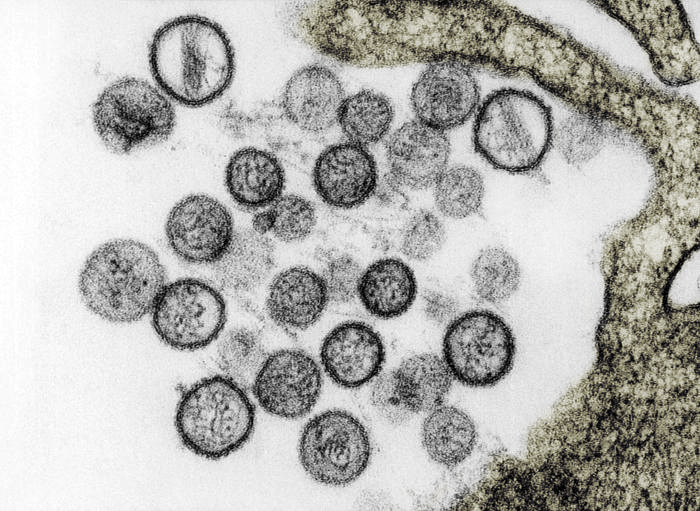
Hantaviruses are a group of RNA viruses belonging to the Hantaviridae family. They are mainly transmitted by rodents, which are considered their natural reservoirs, whilst humans are accidental hosts who may develop severe and potentially fatal disease.
The genus Orthohantavirus includes all hantaviruses responsible for zoonotic disease. The most relevant species are classified according to their geographical distribution and the predominant clinical syndrome they cause.
European and Asian Orthohantavirus
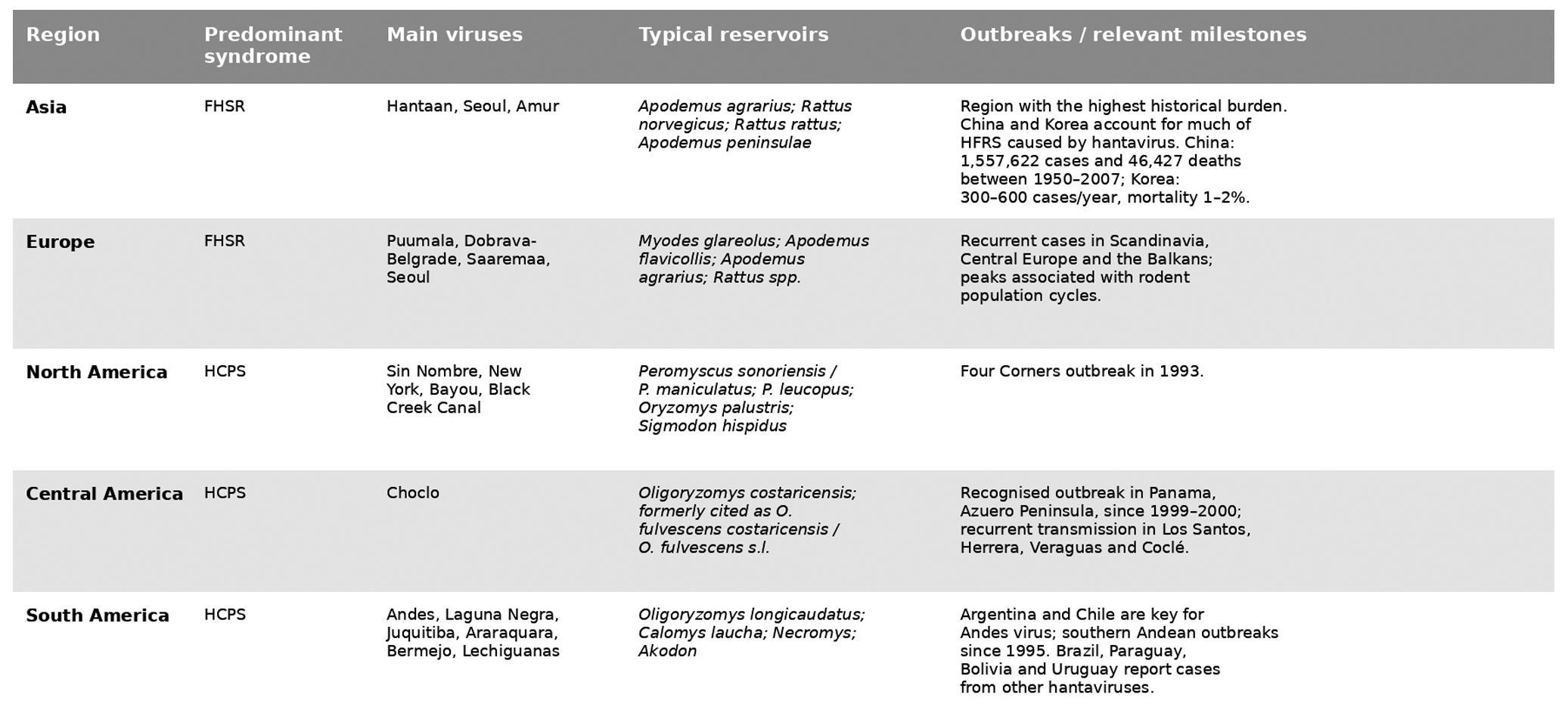
These cause haemorrhagic fever with renal syndrome (HFRS). Three species are particularly noteworthy:
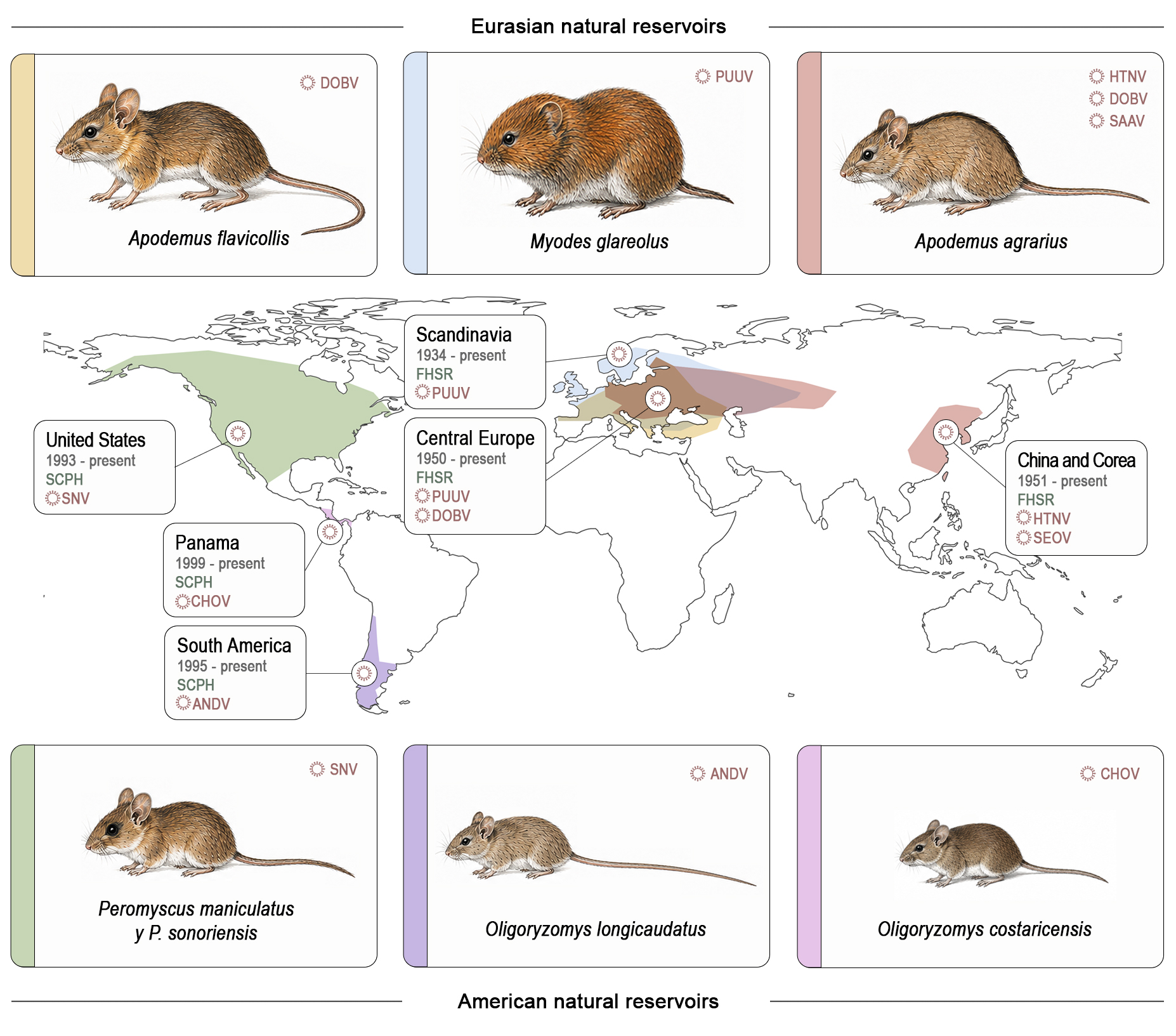
- Puumala virus (PUUV): mainly distributed in western and central Europe and Russia west of the Ural Mountains. Its principal reservoir is the bank vole (Myodes glareolus). It causes a mild to moderate form of HFRS, usually with low mortality (<1%).
- Dobrava-Belgrade virus (DOBV): mainly distributed in eastern Europe and the Balkans. Its reservoirs are rodents of the genus Apodemus, especially the yellow-necked mouse (Apodemus flavicollis) and the striped field mouse (Apodemus agrarius). It causes moderate to severe forms of HFRS, with mortality reaching up to 10% in some variants.
- Hantaan virus (HTNV): present mainly in East Asia, particularly China and the Korean peninsula, as well as parts of eastern Europe. Its principal reservoir is the striped field mouse (A. agrarius). It causes severe forms of HFRS with mortality that may reach 15%.
American Orthohantavirus
These cause hantavirus cardiopulmonary syndrome (HCPS). Two species are particularly noteworthy:
- Andes virus (ANDV): distributed in South America, mainly in the southern cone (Argentina, Chile). Its main reservoir is the long-tailed pygmy rice rat (Oligoryzomys longicaudatus). It is the only hantavirus species with documented person-to-person transmission. Infection is associated with very high lethality, reaching up to 40%, and with prolonged viraemia leading to systemic dissemination.
- Sin Nombre virus (SNV): distributed in North America, mainly the United States and Canada. Its principal reservoir is the deer mouse (Peromyscus maniculatus). It causes HCPS with high fatality rates (up to 50%), associated with acute respiratory failure.
Epidemiology
Hantaviruses have a worldwide distribution associated with that of their reservoirs.
Natural reservoirs are mainly wild rodents with persistent, generally asymptomatic infections and viral shedding in urine, faeces and saliva. The main route of transmission to humans is the inhalation of aerosols contaminated with these excretions. Transmission by direct contact with rodents or their bites is less common. Foodborne transmission is rare.
Urban rats (Rattus norvegicus and Rattus rattus), with a worldwide distribution, have also been identified as hosts of certain hantaviruses, particularly Seoul virus (SEOV), responsible for outbreaks of HFRS in urban and peri-urban settings, with particular relevance in China.
Evidence of exposure to hantaviruses or related viruses has been found in other vertebrates such as shrews, moles, bats, reptiles and fish, but the zoonotic relevance of many of these lineages remains uncertain, as detection of genetic material or antibodies against a hantavirus species does not necessarily imply that an animal is a competent reservoir.
In humans, who are accidental hosts, infection may cause HFRS or HCPS without sustaining the transmission cycle, with the exception of Andes virus, where transmission between people who have had prolonged and close contact has been documented.
Outbreaks in humans have been associated with ecological factors such as climate (temperature, rainfall, humidity) and food availability (mast years), which favour changes in rodent population density, and land-use changes (deforestation, agriculture, urbanisation) that may increase the probability of interaction between humans and infected rodents.
The main risk factors include rural or forestry activities, outdoor activities in natural environments, and the cleaning of enclosed contaminated spaces.
Epidemiological investigation in the event of an outbreak should include identification of the source of exposure (home, workplace, recreational risk activities…), identification of rodent species present in the environment, contact tracing with follow-up over six weeks, and active surveillance of clinical symptoms.

Case definitions
- Suspected case: fever ≥38°C with respiratory or renal symptoms and a history of rodent exposure within the previous six weeks.
- Probable case: suspected case with compatible clinical findings such as thrombocytopenia or haemoconcentration, raised creatinine (HFRS) or bilateral pulmonary infiltrates (HCPS).
- Confirmed case: confirmation by RT-PCR or specific serology.
Pathogenesis and clinical features
Hantavirus infection causes two principal syndromes in humans:
- Hantavirus cardiopulmonary syndrome (HCPS): predominant in the Americas and characterised by high lethality (30–50%). Initially it presents with fever, myalgia and malaise, followed by pulmonary oedema, acute respiratory failure and shock.
- Haemorrhagic fever with renal syndrome (HFRS): predominant in Europe and Asia. It is characterised by acute renal involvement, haemorrhagic alterations and varying degrees of renal failure.
The incubation period ranges from 1 to 8 weeks, most commonly 2–4 weeks.
The principal lesion is endothelial dysfunction with increased capillary permeability mediated by the host immune response. As a consequence, hypotension, pulmonary oedema, shock and renal failure may develop.
Treatment
There is currently no universally accepted specific antiviral treatment for hantavirus infection. Management is mainly supportive and includes clinical monitoring, fluid and electrolyte control, oxygen therapy, ventilatory support, haemodynamic management and renal support, including dialysis when necessary. Clinical management must always be accompanied by appropriate isolation and biosafety measures.
Diagnosis
Diagnosis of hantavirus infection is primarily laboratory-based and must be confirmed using specific techniques. Clinical and analytical findings may guide the diagnosis.
Sample types: The main samples used are blood (serum and/or plasma or whole blood), urine (particularly useful in HFRS) and tissues (lung, kidney, spleen or other organs in severe or fatal cases). The optimal sampling time varies according to the analytical technique:
- PCR: first 5–7 days after symptom onset (viraemic phase).
- Serology: from the fifth day of illness onwards (for IgM), and paired samples at 10–14 days (for IgG).
Specific diagnostic techniques: Molecular detection by RT-PCR or serology.
- Molecular detection: RT-PCR (reverse transcription polymerase chain reaction). The technique of choice in the acute phase, as it detects viral RNA and has greater yield during the initial febrile or viraemic phase. It offers high sensitivity and specificity and allows early confirmation before humoral immune response develops. Its limitation is that viraemia is transient, so a negative RT-PCR does not exclude infection if clinical features are compatible.
- Serological diagnosis: Detection of IgM and IgG antibodies using techniques such as ELISA, indirect immunofluorescence (IIF) or viral neutralisation (confirmatory in reference laboratories). These techniques are used in the late phase.
Interpretation of the technique:- Positive IgM: recent acute infection.
- IgG seroconversion in paired samples: diagnostic confirmation.
- Isolated IgG: indicative of past infection.
Confirmation criteria: A case is considered confirmed when at least one of the following is met: detection of viral RNA by RT‑PCR in blood or tissues; positive hantavirus-specific IgM; or IgG seroconversion in paired samples (increase ≥4-fold).
Complementary techniques: Immunohistochemistry on tissues and viral isolation in high-security laboratories may be complementary techniques for diagnosis.
Non-specific laboratory findings may guide the diagnosis indirectly:
- Thrombocytopenia.
- Haemoconcentration (elevated haematocrit).
- Leucocytosis.
- Renal impairment: raised creatinine, proteinuria and microhaematuria.
- Raised LDH and transaminases.
- Bilateral pulmonary infiltrates (HCPS).
Biosafety: Samples must be handled under appropriate biosafety conditions, always in a safety cabinet, avoiding aerosol-generating procedures and using appropriate personal protective equipment:
- Safety level
- BSL-2: inactivated samples.
- BSL-3: potentially infectious samples, aerosol-generating procedures and viral culture.
- Personal protective equipment: FFP2/FFP3 mask, gloves and eye protection.
Surveillance and control
Hantavirus disease is subject to urgent mandatory notification and any outbreak must be reported to the relevant public health authorities and to the WHO in accordance with the International Health Regulations (IHR 2025). Data must be provided for epidemiological investigation.
Control measures include:
Environmental control:
- Rodent control.
- Sealing of dwellings.
- Waste management.
- Prevention of rodent access to food.
Cleaning of contaminated areas:
- Prior ventilation (≥30 min).
- No dry sweeping: pre-dampen contaminated surfaces with disinfectant before cleaning, avoid vacuum cleaners or dry sweeping to prevent aerosols.
- Use of disinfectants (sodium hypochlorite).
- Use of personal protection: FFP2/FFP3 mask, gloves and eye protection.
Isolation of infected persons.
A One Health approach is essential for effective surveillance and control of hantavirus infections, as it integrates human, animal and environmental surveillance to detect ecological changes associated with transmission risk at an early stage:
- Human health: early diagnosis, clinical management, epidemiological surveillance and education in rural areas.
- Animal health: monitoring of rodent populations and identification of reservoirs.
- Environment: assessment of ecological changes related to rodent density or contact with humans (deforestation, urbanisation, climate change…).
Prevention
At individual level
- Avoiding contact with rodents and their droppings.
- Not handling dead rodents.
- Ventilating enclosed spaces.
- Using protective equipment during high-risk activities.
At community level
- Health education.
- Pest control.
- Improvement of housing conditions.
- Continuous environmental and epidemiological surveillance.
General conclusions
Hantaviruses are causative agents of an emerging zoonosis influenced by climatic and environmental factors that affect infection dynamics in their natural hosts, the various rodent species that may act as sources of the pathogen for humans. The apparent absence of disease in rodents indicates a stable evolutionary relationship between the pathogen and its natural host, whilst the fact that most hantavirus species are not transmitted between humans limits their public health impact.
The Andes virus is the major exception to this rule because of its prolonged viraemia and systemic dissemination, associated with the presence of infectious virus in the saliva and fluids of infected persons, which enables person-to-person transmission in cases of close contact. Combined with its high lethality and the existence of a period of transmissibility during the prodromal phase, this requires specific control strategies distinct from those used for other hantaviruses.
1VISAVET Health Surveillance Centre
Complutense University Madrid (Spain)
2Animal Health Department, Veterinary Medicine Faculty
Complutense University Madrid (Spain)
ned@visavet.ucm.es
References
- Alonso, D. O., Iglesias, A. A., Coelho, R. M., et al. 2020. “Person-to-Person Transmission of Andes Virus in Hantavirus Pulmonary Syndrome, Argentina, 2014.” Emerging Infectious Diseases 26(4):756–759.
- Centers for Disease Control and Prevention. 2026. “Clinical Overview of Hantavirus”. Retrieved May 8, 2026.
- European Centre for Disease Prevention and Control. 2023. “Hantavirus Infection.” Retrieved May 12, 2026.
- Ferrés M, Vial P, Marco C, et al. Prospective evaluation of household contacts of persons with hantavirus cardiopulmonary syndrome in Chile. J Infect Dis. 2007;195(11):1563-1571.
- Ferrés M et al. 2024. Viral shedding and viraemia of Andes virus during acute hantavirus infection: a prospective study. Lancet Infect Dis. 2024 Jul;24(7):775-782.
- Hjelle, B., and F. Torres-Pérez. 2010. “Hantaviruses in the Americas and Their Role as Emerging Pathogens.” Viruses 2(12):2559–2586.
- Jonsson, C. B., L. T. M. Figueiredo, and O. Vapalahti. 2010. “A Global Perspective on Hantavirus Ecology, Epidemiology, and Disease.” Clinical Microbiology Reviews 23(2):412–441.
- Martínez VP, Bellomo C, San Juan J, et al. Person-to-person transmission of Andes virus. Emerg Infect Dis. 2005;11(12):1848-1853.
- Tian H, Stenseth NC. The ecological dynamics of hantavirus diseases: From environmental variability to disease prevention largely based on data from China. PLoS Negl Trop Dis. 2019 Feb 21;13(2):e0006901.
- Toledo, J., et al. 2022. “Evidence for Human-to-Human Transmission of Hantavirus: A Systematic Review.” J Infect Dis. 2022 Oct 17;226(8):1362-1371.
- Vaheri, A., T. Strandin, J. Hepojoki, T. Sironen, H. Henttonen, S. Mäkelä, and J. Mustonen. 2013. “Uncovering the Mysteries of Hantavirus Infections.” Nature Reviews Microbiology 11(8):539–550.
- World Health Organization. 2026. “Hantavirus” Retrieved May 12, 2026.
- Zeier M, et al. 2005. New ecological aspects of hantavirus infection: a change of a paradigm and a challenge of prevention--a review. Virus Genes. Mar;30(2):157-80.